Don't miss our holiday offer - up to 50% OFF!


Zero Turn vs Remote Control Mower: 7 Key Differences for Hills and Large Yards

Choosing between a zero turn vs remote control mower is one of the most important equipment decisions a property owner, farmer, or landscaping contractor will make in 2026. Both machines cut grass, but they are engineered for completely different jobs. A zero turn mower is a high-speed, rider-operated machine built for open, flat turf. A remote control mower is a radio-operated machine that climbs slopes, crosses ditches, and cuts banks that no rider should ever attempt. This 3,000-word guide compares every angle of the zero turn vs remote control mower debate — cost, safety, productivity, terrain capability, maintenance, resale value, and real-world operating data — so you can buy the right machine the first time.
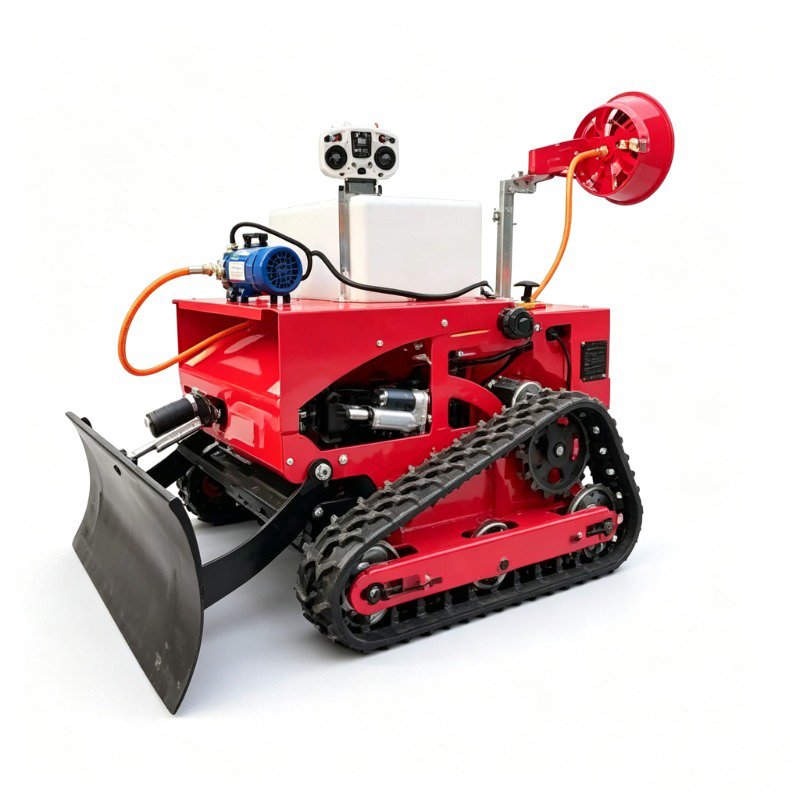
Zero Turn vs Remote Control Mower: The Market in 2026
Before we compare machines, it helps to understand the size of the market you are buying into. The global remote control lawn mower market was valued at approximately $290 million in 2024 and is projected to grow at a compound annual growth rate (CAGR) of 5.8% through 2032, driven by labor shortages, rising insurance costs, and the need to mow slopes without putting operators at risk, according to market research published by PMarket Research. The robotic and remote lawn mower segment tracked by Grand View Research is forecast to exceed $2.1 billion by 2030.
Meanwhile, the zero turn mower market remains much larger in unit terms: North American dealers sell hundreds of thousands of zero turns every year, with the residential zero turn segment dominated by John Deere, Toro, Husqvarna, Cub Cadet, and Ariens. The key point is not that one market is bigger — it is that the zero turn vs remote control mower decision sits at the intersection of two fast-growing segments, and choosing correctly depends on your terrain profile.
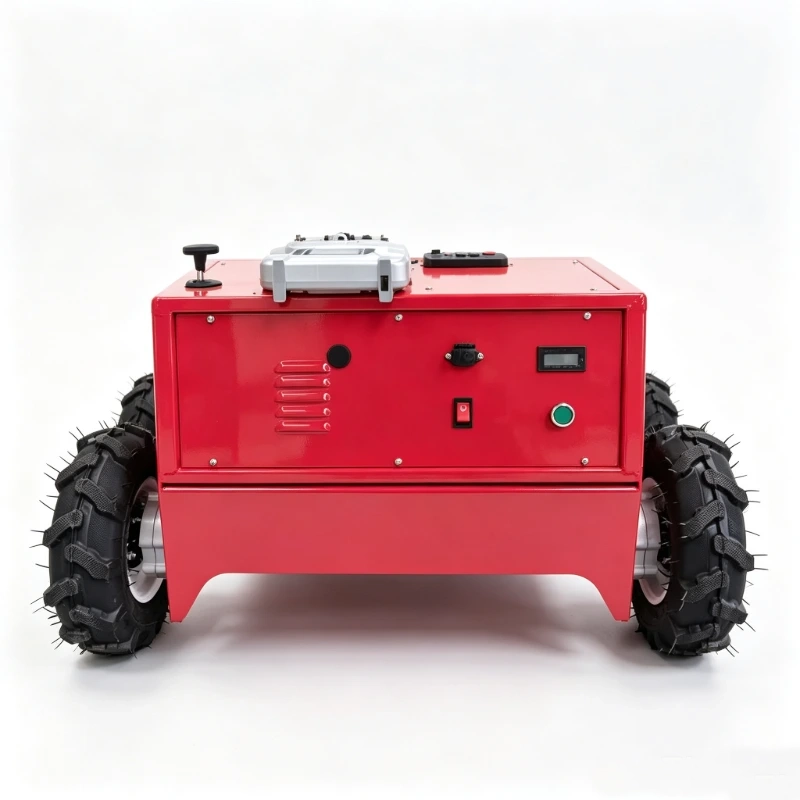
What Is a Zero Turn Mower? How It Works
A zero turn mower is a rider mower with two independently driven rear wheels and a front caster. The two drive wheels rotate in opposite directions to spin the machine in place — hence “zero turn” radius. Steering is controlled with two lap bars, and the deck sits under the center of the machine.
Core Components of a Zero Turn Mower
- Engine: Gasoline (typically 20-35 HP) or increasingly battery-electric, mounted at the rear.
- Hydrostatic transmissions: Two pumps and motors that drive each rear wheel independently.
- Fabricated or stamped decks: 42-72 inches wide for residential and commercial models.
- Operator station: Suspended seat, lap bars, and ROPS (roll-over protection structure) on many models.
- Tires: Wide turf tires (flat lawn) or bar tires (rough ground) on the rear axle.
Where Zero Turns Excel
- Flat, open lawns of 1-5 acres where speed equals money.
- Commercial landscaping on sports fields, parks, and gated communities.
- Operators who enjoy the speed and cut quality of a 60-inch+ deck.
- Properties with no slopes steeper than about 10-15 degrees.
Where Zero Turns Fail
- Slopes over 15 degrees — rollover risk is real and documented.
- Wet or soft ground — weight causes ruts and bogging.
- Ditches, creek banks, embankments, and orchard rows.
- Overgrown or brushy land where the operator must dismount repeatedly.
For a deeper look at rider machines, see our comparison of riding mowers vs remote control mowers.

What Is a Remote Control Mower? How It Works
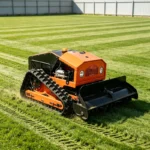
A remote control mower is a mowing machine with no rider. The operator stands on the ground or sits in a vehicle, holding a handheld transmitter that drives the machine via radio signals at ranges typically up to 80 meters (260 feet). Decks range from 500 mm (about 20 inches) up to 1000 mm (about 39 inches), and machines come in wheeled and tracked configurations.
Core Components of a Remote Control Mower
- Power unit: Gasoline engine, battery, or hybrid — mounted low for stability.
- Transmission: Hydrostatic or belt drive to the drive wheels or tracks.
- Radio receiver and control board: Converts transmitter joystick inputs into throttle, steering, and deck commands.
- Cutting deck: 500-1000 mm, often with adjustable cutting height and discharge chutes.
- Track or wheel undercarriage: Rubber tracks for slopes; wheels for speed on flat ground.
Where Remote Control Mowers Excel
- Steep slopes from 15 up to 45 degrees — the operator stays off the slope entirely.
- Roadside embankments, highway ditches, and dam faces.
- Orchards and vineyards where tight rows and low branches rule out riders.
- Wet, soft, or uneven ground where rubber tracks distribute weight.
- Hazards: bee hives, poison ivy, unstable banks, and wildlife.
Where Remote Control Mowers Are Slower
- Large, perfectly flat lawns where a 60-inch zero turn is simply faster.
- Jobs requiring extremely fine striping on golf greens.
- Operators who are not comfortable with a transmitter interface.
If your property includes slopes, our steep slope buyers guide covers selection in depth.
The 7 Core Differences: Zero Turn vs Remote Control Mower
Here is the complete breakdown of the zero turn vs remote control mower comparison across every dimension that matters.
1. Slope Safety and Rollover Risk
This is the single biggest reason buyers switch. The U.S. Consumer Product Safety Commission (CPSC) reports that riding mowers and zero turns are involved in tens of thousands of ER-treated injuries each year, and mower overturns are a leading cause of death among riding mower accidents — the CPSC’s riding mower fact sheet documents these hazards directly. Walk-behind mowers account for about 68,000 ER visits annually, and riding mowers add tens of thousands more, per the CPSC’s walk-behind mower fact sheet.
The danger is concentrated on slopes: a zero turn’s center of gravity is high, and once the uphill wheel loses traction, the machine can slide and roll sideways. A remote control mower removes the operator from the equation completely — nobody rides the machine, so nobody can be crushed, thrown, or pinned. On slopes, this is not a feature; it is the entire point.
- Zero turn: operator sits on the machine; rollover risk above ~15 degrees.
- Remote control: operator stands away; machine can work to 45 degrees.
- Insurance: commercial contractors often see lower liability exposure with remote machines on slopes.
2. Purchase Price: Zero Turn vs Remote Control Mower Cost
Pricing overlaps far more than most buyers expect. Here is the realistic 2026 price landscape:
- Residential zero turns: $2,500-$5,000 (e.g., Cub Cadet XT/ZT series, Husqvarna Z200/Z400).
- Commercial zero turns: $6,000-$15,000+ (Toro Z Master, John Deere Z900, Ariens/Gravely).
- Remote control mowers: $2,000-$8,000 depending on deck width, drive type, and brand.
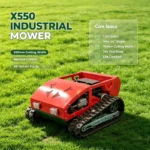
Xinfa sells factory direct, which removes dealer margins — a Xinfa 550 mm remote control mower lands in the $2,000-$4,000 range, directly competing with entry zero turns while adding slope capability. See the Xinfa 550 mm remote control mower for pricing.
Price comparison (average retail, USD):
ZT $3.5k
RC 500mm $2.5k
RC 800mm $4.5k
Comm ZT $10k
RC 1000mm $6k
3. Productivity and Mowing Speed
On flat, open ground, nothing beats a big zero turn. A 60-inch commercial zero turn can mow 3-5 acres per hour, while a 800-1000 mm remote control mower typically covers 1.5-3 acres per hour depending on terrain. Use a lawn mowing calculator to model your own property — the Inch Calculator mowing tool estimates time by lawn size and mower width.
But productivity is not just mowing speed — it is usable acres. A zero turn on a 30-degree bank is productivity of zero because the machine cannot safely operate there. A remote control mower adds those acres to your productive area. For properties with 20%+ of their area on slopes, the total-job-time comparison flips in favor of remote control.
- Flat acreage: zero turn wins on raw speed.
- Mixed terrain: remote control wins on usable coverage.
- Manual trim work: both need trimmers on edges; remote machines cut closer to obstacles.
Productivity on 5 acres of mixed terrain (hours):
Zero turn 1.4h
RC 1000mm 2.2h
RC 800mm 2.9h
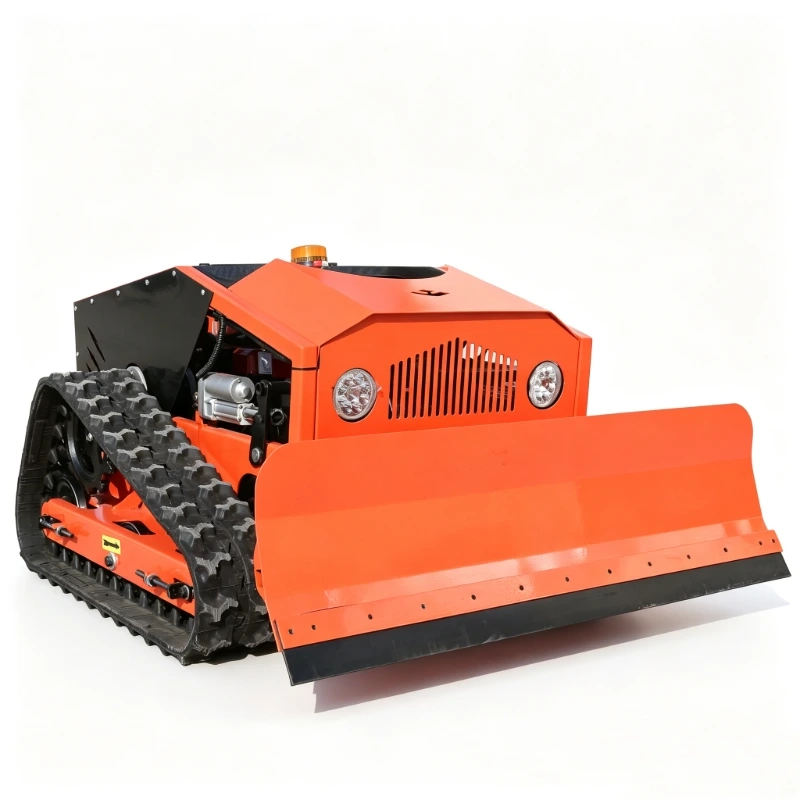
4. Terrain and Ground Capability
Terrain is where the zero turn vs remote control mower comparison stops being close. Zero turns need dry, firm, reasonably flat ground. Remote control mowers — especially tracked models — climb wet grass, cut cross-slopes, and handle ground that would strand a rider machine.
- Slopes 0-10°: Both work; zero turn is faster.
- Slopes 10-20°: Zero turn risky; remote control comfortable.
- Slopes 20-45°: Zero turn unsafe; remote control (tracked) purpose-built.
- Wet ground: Zero turns rut and bog; tracked remote mowers float.
- Orchards/vineyards: Zero turns struggle with rows; remote mowers fit between trunks.
Xinfa’s tracked lineup — from the 550 mm tracked to the 1000 mm tracked — is engineered for exactly these conditions. The wheeled 550 mm wheeled and 500 mm wheeled models suit gentler slopes and faster flat work.
5. Maintenance and Operating Cost
Both machines need blades, belts, and engine/battery service. The differences matter over a 5-year ownership period.
- Zero turns: hydrostatic drive service, more belts, more moving parts, higher repair cost.
- Remote mowers: simpler mechanical drives; tracked units need track wear inspection.
- Fuel: gas remote mowers sip fuel compared to 25-35 HP zero turns at wide-open throttle.
- Battery: electric remote mowers cut fuel and oil costs to near zero.
Follow our maintenance checklist to keep either machine in top condition.
6. Operator Comfort and Labor
A zero turn operator absorbs hours of vibration, heat, dust, and noise every week. Remote control operation is physically lighter: you walk beside the machine, stay out of the sun, and avoid breathing dust. For commercial crews this translates into less fatigue and more billable hours per day. Many contractors now run a zero turn for flat lawns and a remote mower for the slopes — our commercial slope mower guide explains the fleet strategy.
7. Resale Value and Longevity
- Zero turns hold decent resale where flat-lawn demand exists; high-hour commercial units depreciate fast.
- Remote control mowers are newer in North America, so resale is thinner but factory-direct brands like Xinfa publish spec sheets that support used pricing.
- Build quality: Xinfa uses heavy-gauge steel decks and commercial-grade control boards designed for daily commercial use.

Why Xinfa Is the Smart Choice in the Zero Turn vs Remote Control Mower Decision
If the zero turn vs remote control mower question led you to the remote side, Xinfa is the brand to evaluate first. Xinfa is a factory-direct manufacturer of radio-controlled mowers with a full range of wheeled and tracked models. Buying factory direct means you pay for the machine, not for dealer layers — typically 30-40% below comparable European machines.
Xinfa Model Lineup at a Glance
- 500 mm wheeled — entry slope mowing, tight budgets.
- 500 mm tracked — better grip for steeper banks.
- 550 mm wheeled — best-selling residential slope mower.
- 550 mm tracked — the popular balance of width and traction.
- 800 mm wheeled & tracked — commercial-width productivity.
- 1000 mm tracked — maximum output for contractors and municipalities.
Every Xinfa model ships with the transmitter, cutting deck, and safety documentation included, and the company supports dealers and distributors worldwide — see our import guide for dealers and our manufacturer profile.
Zero Turn vs Remote Control Mower: Decision Framework
Use this checklist to decide in five minutes.
- Map your terrain. Walk the property. If any mowed area exceeds 15 degrees, zero turns are out for that area.
- Count usable acres. Flat acres favor zero turns; sloped acres favor remote control.
- Set a budget. Under $5,000, a Xinfa remote mower competes directly with entry zero turns and adds slope capability.
- Check operator comfort. If your crew dreads slope mowing, remote control removes the hazard.
- Consider the fleet. Many owners buy both — one zero turn for flat lawn, one remote mower for banks.
Still unsure? Read our complete remote control mower buying guide or the durability guide for large yards.
Cost of Ownership: 5-Year Total Comparison
Let’s put numbers on ownership. Assume 30 acres per year of mixed mowing and 5 years of use:
- Entry zero turn: $3,500 purchase + $1,200 service + $900 fuel = $5,600.
- Commercial zero turn: $10,000 purchase + $2,800 service + $1,800 fuel = $14,600.
- Xinfa 800 mm remote: $4,500 purchase + $900 service + $600 fuel = $6,000.
- Xinfa 1000 mm tracked remote: $6,000 purchase + $1,200 service + $900 fuel = $8,100.
5-year cost of ownership (USD):
ZT entry $5.6k
RC 800mm $6k
RC 1000mm $8.1k
Comm ZT $14.6k
The takeaway: a Xinfa remote control mower delivers slope capability at a 5-year cost below a residential zero turn — and far below a commercial zero turn. Market research from Emergen Research confirms the remote mower segment is expanding precisely because total-cost-of-ownership on difficult terrain favors these machines.
Frequently Asked Questions
Can a zero turn mower handle a 20-degree slope?
Manufacturers generally rate zero turns for slopes up to 15 degrees, and many warn against exceeding 10 degrees with a loaded deck. On a 20-degree bank, rollover risk is severe. This is the central safety argument in the zero turn vs remote control mower discussion.
How far can a remote control mower operate from the operator?
Most, including Xinfa models, operate up to 80 meters (260 feet) of line-of-sight range. Always keep the machine visible for safety.
Which is cheaper to run, a zero turn or a remote control mower?
Remote control mowers generally use less fuel (smaller engines) and have simpler drivetrains, so running costs are typically lower — especially battery models.
Can a remote control mower replace a zero turn on flat lawn?
It can, but a zero turn is faster on large flat lawns. The best strategy for many owners is a zero turn for flat ground plus a remote mower for slopes and banks.
Is Xinfa a reliable brand?
Xinfa is a factory-direct manufacturer with commercial-grade build quality, published specifications for every model, and worldwide dealer/distributor support. See the 800 mm v2 model and the 800 mm model for specs.

Final Verdict
The zero turn vs remote control mower decision has a clear answer once you know your terrain. Flat, open properties of 1-5 acres belong to zero turns — fast, comfortable, and proven. Properties with hills, banks, orchards, wet spots, or any slope over 15 degrees belong to remote control mowers, and Xinfa’s factory-direct lineup makes that choice affordable. For the growing number of owners whose land is mostly slope, a remote control mower is not an alternative to a zero turn — it is the safer, cheaper, and more productive machine. Start with the 1000 mm tracked model if you cut professionally, or the 500 mm tracked if you are starting out.
Remote Control Mower Technology Explained
Understanding how a remote control mower actually works helps you maintain it and buy with confidence. The system has four layers:
- Transmitter: A handheld unit with joysticks or switches. Xinfa transmitters use a 2.4 GHz radio link, the same band used by modern drones and RC cars, which offers strong interference resistance and long battery life.
- Receiver and control board: Mounted on the machine, the receiver decodes signals and the control board manages throttle, steering servos, and the blade clutch.
- Drivetrain: Hydraulic or mechanical transmission turns the wheels or tracks. Tracked models use two independent track drives so the machine can counter-rotate, spin in place, and climb steep banks without sliding sideways.
- Cutting system: The deck houses one or two blades, often with adjustable cutting height from about 20 mm to 120 mm, plus discharge options for side, rear, or mulching.
Because there is no rider, the machine’s center of gravity can sit lower and wider than a zero turn’s, which is exactly why a remote mower holds traction where a rider would tip. This is the engineering core of the zero turn vs remote control mower difference.
Real-World Use Cases: Who Actually Buys Remote Control Mowers
Remote control mowers are not a novelty. They are the standard tool for specific industries:
- Municipal road crews: DOT and county crews cut roadside embankments and drainage ditches where sending a rider is both dangerous and slow. A tracked remote mower works while traffic passes, with the operator safely on the shoulder.
- Orchard and vineyard managers: Narrow rows and low branches make zero turns impractical. Remote mowers cut under trees and between trunks without damaging fruit or equipment — see our orchard mowing guide.
- Landscaping contractors: Commercial crews use a remote mower for the “hard 20%” of every property — the slopes and banks a zero turn cannot touch — and run zero turns on the flat lawn. Our commercial guide walks through the fleet math.
- Homeowners on hills: A growing segment — owners of steep lake lots, canyon properties, and hillside homes who previously paid contractors thousands per year to mow a slope no machine could safely cut. A 500-550 mm Xinfa unit often pays for itself in one season.
- Golf and turf managers: Bunker banks, pond edges, and steep roughs that would otherwise be hand-trimmed.
- Farmers: Dam faces, irrigation ditches, fence lines, and pond banks on agricultural land.
Zero Turn vs Remote Control Mower: Side-by-Side Spec Comparison
Here is the full specification comparison at a glance:
- Operator position: Zero turn — seated on machine; Remote — standing on ground, up to 80 m away.
- Max slope: Zero turn — ~15°; Remote (tracked) — up to 45°.
- Typical deck: Zero turn — 42-72 in; Remote — 500-1000 mm (20-39 in).
- Typical speed: Zero turn — 6-10 mph; Remote — 1.5-5 mph working speed.
- Ground clearance: Zero turn — low, turf-focused; Remote — higher, rough-ground capable.
- Weight distribution: Zero turn — operator adds high center of gravity; Remote — low, wide stance, no rider.
- Wet ground: Zero turn — ruts and bogs; Remote tracked — floats on soft ground.
- Fuel economy: Zero turn — 20-35 HP engines; Remote — smaller engines or battery, notably lower consumption.
- Maintenance complexity: Zero turn — complex hydrostatic drives; Remote — simpler mechanical drives.
- Operator fatigue: Zero turn — high on long jobs; Remote — low, operator walks or rests.
Commercial Fleet Strategy: Running Both Machines
The most cost-effective fleet in 2026 often includes both. Here is why:
- Zero turn handles the flat, high-acreage lawn at maximum speed.
- Remote mower handles the slopes, banks, and ditches that would otherwise be hand-trimmed or left unmowed.
- Hand-trimming slopes costs $40-$80 per hour in labor; a remote mower eliminates most of it.
- Crews stop dreading the dangerous part of each property, improving retention.
- Clients see complete, uniform cuts — no patchy bank left to mow by hand.
Many landscaping businesses report that adding one remote control mower expands their serviceable property list by 30-50% because they can now bid on hill homes and commercial banks they previously declined. For the detailed breakdown of slope mower economics, read our ultimate buying guide.
Xinfa Product Specifications: What You Get
Every Xinfa remote control mower ships with a complete package. Here is what buyers can expect across the lineup:
- Radio range: 80 meters line-of-sight on all models.
- Cutting height: Adjustable, typically 20-120 mm.
- Deck options: 500 mm, 550 mm, 800 mm, and 1000 mm widths.
- Drive options: Wheeled for speed, tracked for slopes and soft ground.
- Power options: Gasoline, battery, and hybrid configurations.
- Blade systems: Single and dual-blade decks with mulching capability.
- Safety: Emergency stop on the transmitter, blade brake, and low center of gravity design.
- Support: Factory-direct documentation, spare parts supply, and dealer/distributor programs worldwide.
Compare the models directly: the 550 mm wheeled, 550 mm tracked, 800 mm, and 1000 mm tracked cover everything from a hillside home to a municipal contract.
Environmental Impact: Battery Remote Mowers vs Gas Zero Turns
If emissions matter to you — and for many municipalities they now do — the comparison favors remote mowers:
- A gas zero turn burns roughly 1.5-2 gallons per hour under load; a season of commercial use adds up to hundreds of gallons.
- Battery remote mowers produce zero operating emissions and near-zero noise, enabling early-morning work in residential areas.
- Hybrid Xinfa models reduce fuel consumption versus full-gas zero turns while retaining all-day capability.
- Manufacturers across the industry are pushing battery platforms; the remote mower segment is ahead in practical slope use because the machines carry smaller power demands.
This is one more reason the zero turn vs remote control mower calculation keeps shifting toward radio-controlled machines as emission rules tighten in the US and Europe.
How to Test Before You Buy
Whichever side you land on, test before spending thousands:
- Ask for a demo on your own terrain — dealers will usually oblige for a serious buyer.
- Run both machines for 30 minutes; compare fatigue, noise, and cut quality.
- Test the slope your zero turn cannot climb — on the remote mower.
- Check parts availability and service response time, not just the sticker price.
- For factory-direct brands like Xinfa, ask for the full spec sheet and import terms up front.
And if you are importing directly, our step-by-step import guide covers shipping, customs, and paperwork so there are no surprises.

[…] zero turn vs remote control comparison and push mower comparison cover these showdowns in […]
[…] the remote mower for slopes and rough areas, and keep a push mower or zero-turn for flat turf. Our zero turn vs remote comparison covers the fleet […]