Don't miss our holiday offer - up to 50% OFF!


Remote Control Mower Commercial: 7 Proven Ways Landscapers Profit in 2026

For landscaping companies, a remote control mower commercial decision is a business decision, not just a mower purchase. Slope accounts are the highest-margin work most crews turn down — and a commercial remote mower turns that rejected work into recurring revenue while removing the single biggest liability on a job site: a rider on a steep bank. This 2026 guide gives landscaping owners the market data, safety statistics, ROI math, and fleet strategy they need to decide whether (and how) to add a commercial remote control mower.
Remote Control Mower Commercial Market: The Business Case in 2026
The commercial case for remote mowers is built on numbers. The remote lawn mower market is projected to grow from USD 2.02 billion in 2025 to USD 3.70 billion by 2032 (CAGR 9.01%) according to PW Consulting, while the wider robotic and remote mower segment tracked by Emergen Research is forecast to reach USD 9.20 billion by 2035 from USD 2.86 billion in 2025. Dataintelo puts the segment at USD 1.51 billion in 2024, growing to USD 4.35 billion by 2034 (CAGR ~11.2%).
All three forecasts agree on one thing: professional buyers — landscapers, municipalities, golf courses, and farmers — are the fastest-growing customer group. A remote control mower commercial purchase is no longer a novelty; it is a standard fleet line item.
Bar chart: remote mower market size projections (USD billion)
2025 (PW) $2.02B
2032 (PW) $3.70B
2025 (Emergen) $2.86B
2035 (Emergen) $9.20B
Sources: PW Consulting (worldwide remote lawn mower market), Emergen Research (remote lawn mower market). Commercial buyers drive the fastest-growing share.
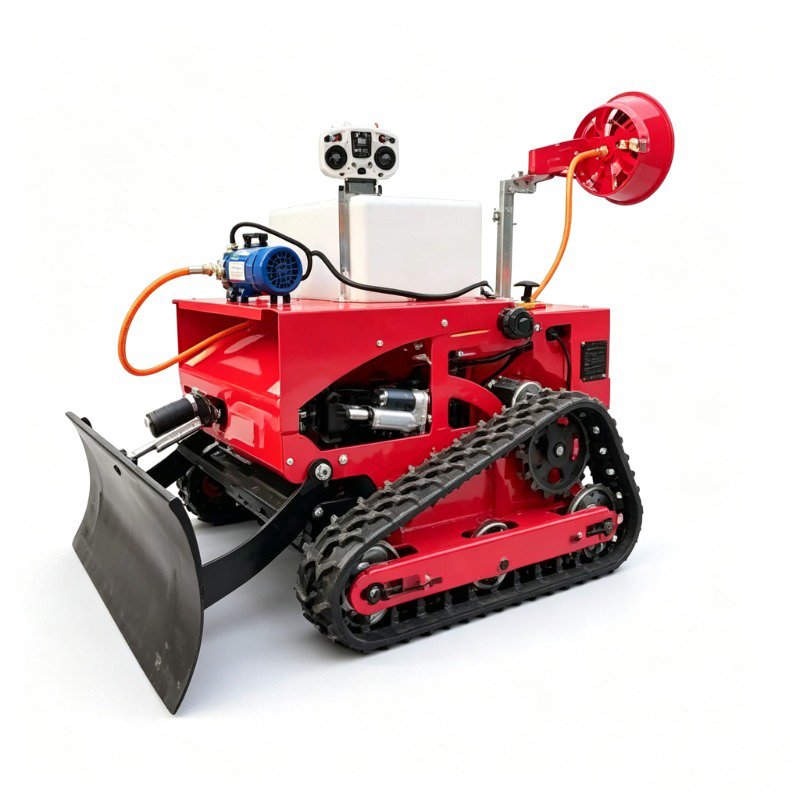
Why Commercial Crews Are Switching: The Safety Math
The strongest argument for a remote control mower commercial fleet addition is worker safety. The U.S. Consumer Product Safety Commission (CPSC riding mower fact sheet) reports roughly 35,000 emergency room visits and about 90 deaths per year from riding mower incidents, with slope rollovers as the dominant fatal pattern. Walk-behind mowers add another ~90,000 ER visits per year (CPSC walk-behind fact sheet).
For a landscaping business, those statistics translate directly into:
- Workers’ compensation costs: one slope rollover claim can wipe out a year of profit on that account.
- Insurance premiums: ride-on mower incidents are among the most common (and expensive) landscaping claims.
- OSHA and site requirements: more commercial sites now require equipment that keeps operators off slopes.
- Staff retention: experienced operators refuse dangerous bank work; remote mowers make those routes safe and staffable.
Putting an operator on a 30-degree bank is a liability no margin justifies. A remote control mower commercial machine removes the rider and keeps the revenue.
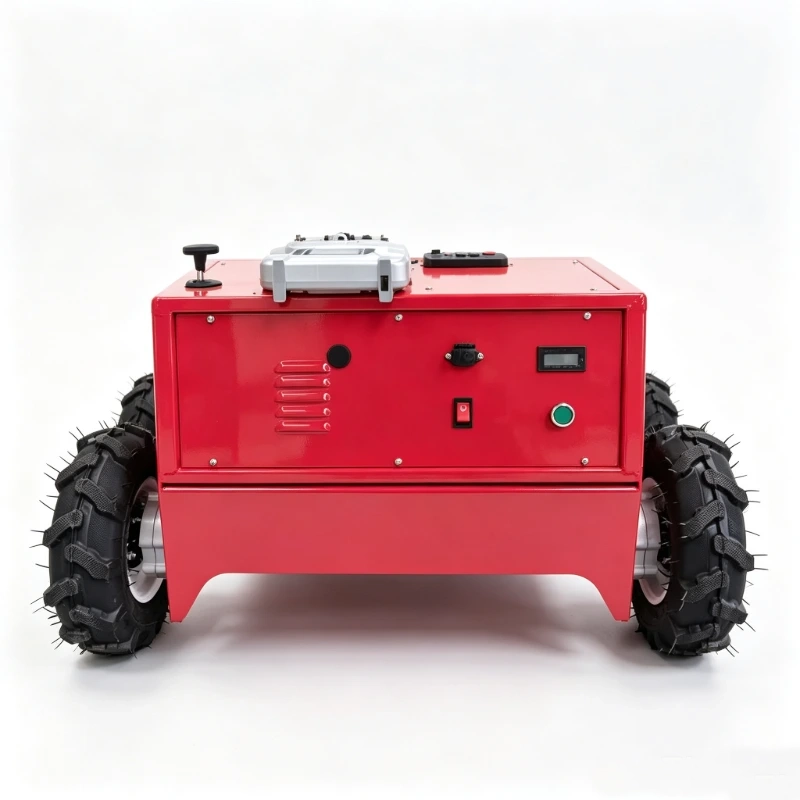
7 Proven Ways a Remote Control Mower Commercial Machine Makes Money
Here is the profit playbook landscapers actually use with commercial remote mowers:
- Bid the accounts you used to decline. Hill properties, roadside banks, and drainage ditches are underserved — and they pay a premium because competitors also refuse them.
- Cut labor cost per acre. One operator handles the machine; no walk-behind crew on the bank. Labor is 50-60% of a landscaping job’s cost.
- Add slope surcharges. Most crews charge 30-100% more per acre for slope work — the market accepts it because nobody else will do it safely.
- Expand service windows. A remote mower works wet banks and rough ground that shut down rider crews, extending the season and the weekly schedule.
- Reduce equipment damage. Riders on slopes tip, slide, and break; remote mowers stay upright, so repair and downtime costs drop.
- Improve cut quality on difficult ground. Remote mowers finish banks cleanly, reducing callback rework on the hardest 20% of every property.
- Win municipal and HOA contracts. Slope-capable fleets qualify for bids that require operator-off equipment on embankments.
Our commercial slope mower guide covers the machine selection side; our zero turn vs remote comparison shows how the two machines split fleet duties.
Remote Control Mower Commercial ROI: A Realistic 5-Year Model
Let’s run the numbers on a remote control mower commercial purchase. Assume a tracked 800-1000 mm machine at ~$6,500, used on two slope accounts totaling 4 acres per week, 20 weeks per season:
- New slope revenue: 80 acre-visits/season × $75/acre premium = ~$6,000/season.
- Labor saved: replacing a 2-person walk-behind crew with 1 operator saves ~$3,000-4,000/season on those same acres.
- Equipment savings: fewer rider repairs on slopes, roughly $500-1,000/season.
- Year-one return: $9,500-11,000 of incremental value against a $6,500 machine — payback in one season or less.
- Year two and beyond: the machine is pure margin on every slope account you keep or add.
Bar chart: commercial remote mower annual value vs cost (USD)
Machine cost $6.5k
Slope revenue $6.0k
Labor saved $3.5k
Repairs saved $0.75k
Year-1 value $10.25k
Illustrative model for a tracked 800-1000 mm machine on two slope accounts. Individual results vary with local rates and crew size.
For the full cost breakdown across machine sizes, see our remote mower cost guide.

What to Look For in a Remote Control Mower Commercial Machine
Commercial use demands more than homeowner models. When evaluating a remote control mower commercial machine, check these seven specifications:
- Deck width and throughput. 800-1000 mm decks for real commercial pace; a 550 mm deck suits smaller crews and tighter sites.
- Tracked undercarriage. Commercial sites are usually rough and steep; rubber tracks keep the machine working on wet banks and loose soil.
- Engine endurance. Gas or hybrid models handle 6-8 hour days; battery-only suits smaller routes with charging windows.
- Steel deck construction. Rocks, roots, and debris punish flimsy decks; commercial steel survives season after season.
- Serviceable drivetrain. Accessible belts, chains, filters, and tracks keep downtime to hours, not days.
- Transmitter range and safety. 80-meter range plus an emergency stop protects the operator from the hazards the machine works.
- Parts and warranty support. Confirm blade, belt, and track availability — and the manufacturer’s response time — before you commit.
Our large-yard durability guide and complete buying guide go deeper on every spec.
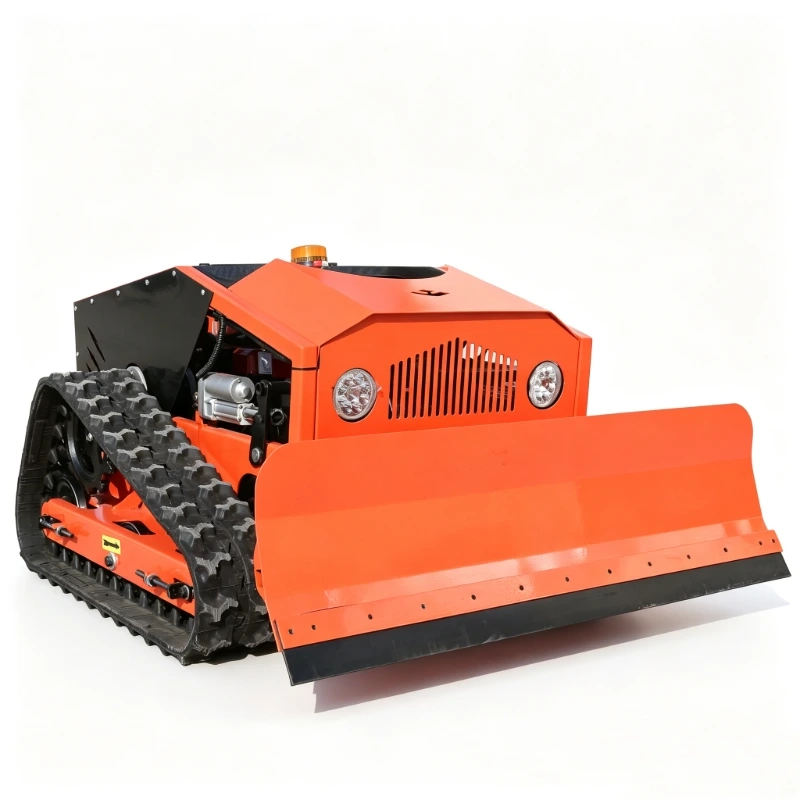
Xinfa: The Factory-Direct Choice for Commercial Fleets
For a remote control mower commercial purchase, Xinfa is the brand to benchmark. Xinfa is a factory-direct manufacturer of radio-controlled mowers, which matters commercially in five ways:
- Factory-direct pricing. No dealer markup — typically 30-40% below comparable European remote mowers, improving your ROI math immediately.
- Commercial lineup. Wheeled and tracked machines from 500 mm to 1000 mm, gas and battery options.
- Slope capability. Tracked models work 35-45 degrees — the ground that generates premium slope revenue.
- Build for uptime. Steel decks, serviceable drivetrains, and documented spare parts keep the machine earning.
- Distributor support. Xinfa supports dealers and distributors, so commercial customers get local parts and service channels.
Recommended Xinfa models for commercial crews:
- Xinfa 800 mm remote control mower — the commercial sweet spot for 3-8 acre jobs and slope accounts.
- 800 mm v2 — updated chassis and controls for professional crews.
- 1000 mm tracked — maximum throughput for farms, golf courses, and municipalities.
- 550 mm tracked — a versatile slope machine for smaller crews.
- 550 mm wheeled — fast and affordable for moderate terrain.
Learn how Xinfa builds and ships commercial machines in our manufacturer profile, and how dealers import them in our import guide.
Building a Commercial Fleet: Remote Mower + Zero Turn
The most profitable fleets in 2026 do not choose between machines — they pair them:
- Zero turns handle flat lawns at 2.3-3.1 acres per hour (Inch Calculator), the fastest flat-ground tool a crew owns.
- Remote mowers handle the slopes, ditches, and rough ground that zero turns cannot safely touch.
- Two operators cover more ground. The zero-turn operator stays on flat turf; the remote-mower operator works the hazard zones from safe ground.
- Bid capacity expands. A crew with both machines qualifies for every account in its area — flat or steep.
- Seasonal resilience improves. Remote mowers keep working wet and rough conditions that idle rider fleets.
Our zero turn vs remote control comparison has the fleet math; our riding mower alternative guide covers the operator-safety angle.
Commercial Case Studies: What Landscapers Report
Across dealer feedback and owner reports, the commercial pattern is consistent:
- Slope revenue is real and recurring. Crews report $50-100/acre premiums on hill accounts they previously declined.
- One machine pays for itself in a season. A tracked 800-1000 mm unit earning on 2-4 slope accounts recovers its purchase price in year one.
- Safety becomes a selling point. Commercial clients (HOAs, municipalities, property managers) prefer contractors who use operator-off equipment on embankments.
- Insurance conversations improve. Fewer ride-on incidents on slopes means cleaner loss history over time.
- Staffing gets easier. Remote mowers let owners assign the steepest routes without finding operators willing to ride them.
For the orchard and agricultural side, read our orchard mower guide; for the safety angle, our safety guide.
Remote Control Mower Commercial: Comparison Table
Here is the commercial lineup side by side:
| Machine | Deck | Slope | Acres/Hour | Power | Best For |
|---|---|---|---|---|---|
| Xinfa 550 wheeled | 550 mm | 20-25° | 0.6-1.2 | Gas/Battery | Moderate slopes, small crews |
| Xinfa 550 tracked | 550 mm | 35-45° | 0.8-1.3 | Gas/Battery | Steep banks, wet ground |
| Xinfa 800 | 800 mm | 20-45° | 1.0-2.0 | Gas/Hybrid | Commercial sweet spot, 3-8 acres |
| Xinfa 1000 tracked | 1000 mm | 35-45° | 2.0-2.5+ | Gas | Farms, golf courses, municipalities |
| Euro premium (comparison) | 600-1000 mm | 35-45° | 1.0-2.5 | Gas | High-budget fleets; 2-3x the price |
Productivity ranges are consistent with the Ariens zero-turn productivity catalog and the Inch Calculator estimator for comparable widths.
5 Mistakes Commercial Buyers Make
Fleet owners waste money on a remote control mower commercial purchase in predictable ways. Avoid these:
- Buying a homeowner model for commercial duty. A light-duty machine dies in month two of daily slope work. Buy commercial construction.
- Choosing wheeled for steep accounts. If your premium work is on real banks, tracked is not optional.
- Ignoring throughput. A 550 mm deck on 10 acres of commercial turf means hours of lost billing time — size the deck to your route.
- Buying on sticker price alone. A European machine at 2-3x the price does not generate 2-3x the revenue; factor payback, not price.
- No parts plan. Downtime is lost billing. Confirm blade, belt, track, and electronics availability before purchase.
Our factory-direct buying guide explains why removing the middleman changes commercial economics.
How to Price Slope Work: The Commercial Remote Mower Rate Card
Pricing is where most landscapers leave money on the table. Here is a practical rate card framework for a remote control mower commercial operation:
- Flat turf (zero turn): $40-60/acre — competitive baseline.
- Moderate slope (wheeled remote): $70-90/acre — add 40-60% for slope risk and slower speed.
- Steep bank (tracked remote): $100-150/acre — premium for the hazard the machine removes.
- Overgrown/rough ground: $120-180/acre — extra passes and blade wear priced in.
- Minimum trip charge: $150-250 — protects your time on small slope accounts.
Bar chart: typical commercial mowing rates by terrain (USD per acre)
Flat turf $40-60
Moderate slope $70-90
Steep bank $100-150
Rough ground $120-180
Illustrative US market ranges; adjust for your local market and crew costs. Slope premiums are accepted because most competitors cannot do the work safely.
Maintenance Plan for Commercial Remote Mowers
Commercial duty is relentless, so maintenance is a schedule, not a habit. Follow this routine:
- Daily: clean the deck, check blade bolts, inspect tracks/tires, test transmitter and emergency stop.
- Every 20-25 hours: sharpen or replace blades — dull blades burn fuel and leave ragged cuts on paying accounts.
- Weekly: check belts, tension, filters, and fasteners; look for wear from rocks and roots.
- Seasonal: full service per the manual — oil, air filter, fuel system, and track/belt replacement as needed.
- Document everything. A service log proves uptime to clients and protects resale value when you upgrade the fleet.
Our maintenance checklist has the complete routine with intervals and part numbers.
Getting Started: A 30-Day Plan to Add a Commercial Remote Mower
If you are sold on the business case, here is a practical 30-day rollout:
- Week 1: Map your service area for slope accounts you declined or subcontracted in the last 12 months — those are your first customers.
- Week 1: Price the route with the rate card above; confirm your insurance carrier covers remote mowers (most do, at lower risk than ride-ons).
- Week 2: Select the machine — start with a tracked 800 mm (or 550 mm tracked for smaller crews) from a factory-direct brand like Xinfa; order spare blades and belts up front.
- Week 2: Train one operator (or yourself) on flat ground; practice the emergency stop and slope technique.
- Week 3: Cut your own steepest property first — it builds skill and gives you before/after photos for marketing.
- Week 3: Email past declined clients: “We now offer safe, operator-off slope mowing for banks and ditches.” Include a photo.
- Week 4: Run the first paid accounts; log hours and rate against the plan; adjust pricing and routing.
Our durability guide helps you select the right spec, and our manufacturer profile explains what to expect from factory-direct support.
Frequently Asked Questions
How much does a commercial remote control mower cost?
Factory-direct tracked machines run $4,500-$6,500 (550-1000 mm). European premium brands start around $8,000-12,000 and climb. Commercial buyers typically recover the factory-direct price in one season of slope revenue.
Are remote control mowers worth it for a landscaping business?
Yes, when you have (or want) slope accounts. The machine adds premium revenue, cuts labor on the hardest ground, reduces ride-on incidents, and expands your bid territory. Payback is typically one season.
What size commercial remote mower should I buy?
Start with a tracked 800 mm machine — the commercial sweet spot for throughput and terrain capability. Add a 550 mm unit for tight sites or a 1000 mm for large municipal/farm work as volume grows.
Can one operator run a remote mower and still manage the crew?
Yes. The operator works the remote machine from safe ground and stays in radio contact with the crew. Many owners use the remote mower as a supervisory position — you see the whole site while the machine works the hazard.
Do commercial clients care about operator-off equipment?
Increasingly yes. HOAs, municipalities, and property managers with embankments prefer contractors using operator-off equipment; some municipal RFPs now require it. It is becoming a compliance and bidding advantage.
Can I finance a commercial remote mower?
Yes. Commercial equipment financing, equipment loans, and lease-to-own programs all apply. Because payback is fast, financing terms rarely matter — the machine earns its own payment.
How do I train crews on a commercial remote mower?
Basic training takes an afternoon: flat-ground practice, transmitter and emergency-stop familiarization, then supervised slope work. Xinfa machines are designed so any crew member can operate them safely after short training.
Final Verdict: Is a Remote Control Mower Commercial Worth It in 2026?
Here is the bottom line for landscaping owners:
- The market is moving your way. Every major forecast shows the remote mower segment growing 9-12% annually, led by professional buyers.
- Slope work is underserved and premium-priced. The accounts you decline today are the highest-margin work available — someone else’s crew is bidding them with a remote mower.
- Safety data demands the change. With 35,000 ER visits and ~90 deaths per year from riding mowers (CPSC), putting riders on banks is a risk no commercial margin justifies.
- Factory-direct economics make the switch easy. Xinfa’s tracked 800-1000 mm machines deliver commercial capability at 30-40% below European equivalents — payback in one season.
A remote control mower commercial addition is not an expense; it is a revenue line. It converts declined accounts into premium billable work, removes the most dangerous task from your crew’s day, and positions your fleet for the slope-heavy contracts that keep growing. Start by comparing Xinfa’s 800 mm model against the rest of the market — the ROI math sells itself.
Remote Control Mower Commercial: Tax and Accounting Notes
Commercial equipment purchases come with accounting decisions. Here is what owners should discuss with their accountant:
- Section 179 / accelerated depreciation (US): qualifying equipment purchases can be expensed in the year of purchase, improving year-one cash flow.
- Repair vs. capitalization: blades, belts, and routine service are operating expenses; the machine itself is a depreciable asset.
- Fuel and maintenance tracking: log fuel, service, and operator hours per machine to price accounts accurately and defend the investment.
- Insurance classification: remote mowers usually carry lower premiums than ride-on equipment because operator-off design reduces injury risk — ask your broker.
- Resale value: commercial steel machines hold value better than homeowner units; a documented service log protects resale.
None of this changes the core decision — a remote control mower commercial machine earns its own payment — but clean accounting makes the ROI visible to your lender and your tax return.
Next Steps for Landscaping Owners
The path from “thinking about it” to “billing slope accounts” is short when you use the right checklist:
- Confirm your insurance carrier covers remote mowers (most do, at lower risk than ride-ons).
- Choose a tracked 800 mm machine (or 550 mm tracked for smaller crews) from a factory-direct brand with documented parts support.
- Train one operator on flat ground, then your own steepest property.
- Reach out to every account you declined in the past 12 months — they are your first slope customers.
- Log hours, rates, and maintenance from day one so the ROI model above becomes your actual P&L.
Commercial slope work is underserved, premium-priced, and growing. A remote control mower commercial machine converts all three into recurring revenue — and factory-direct brands like Xinfa make the entry cost low enough that the payback math works from the first season.

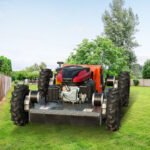
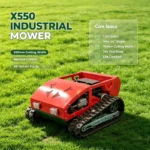
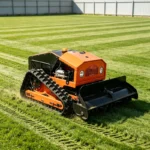
[…] Why it matters: Commercial slope mowing is the highest-margin work most landscapers turn down. The 1000mm tracked wins those accounts: it cuts fast enough to bill profitably, it stays upright on 40-degree banks, and it survives daily commercial use. Premium commercial remote mowers from RC Mowers and SPIDER run $30,000-60,000; the Xinfa 1000mm comes in at roughly $6,000-7,000 factory-direct. For a crew buying a first slope machine, the ROI is one season. Read more in our commercial ROI guide. […]