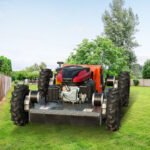
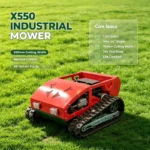
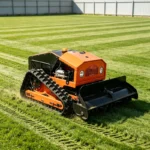
Don't miss our holiday offer - up to 50% OFF!


Slope Mower Buyer’s Guide 2026: Why Remote Control Wins on Hills

A slope mower is any machine designed to cut grass on hills, embankments, roadside ditches, and drainage swales where a standard riding or push mower cannot safely operate. If you have a property with a 20-degree bank, a roadside slope, or an embankment that floods in spring, you already know the problem: ordinary mowers tip, slide, and leave you choosing between an uneven cut and a hospital visit. This 2026 buyer’s guide compares every type of slope mower on the market — riding, walk-behind, zero-turn, robotic, and radio-controlled — so you can pick the right machine for your terrain, budget, and safety standards.
What Is a Slope Mower, and Why Does It Matter?
A slope mower is engineered for grades that ordinary mowers cannot handle safely. The difference is not just horsepower; it is center of gravity, track or wheel geometry, and operator placement. A conventional riding mower tips at roughly 15 degrees on dry turf and less when wet. A purpose-built slope mower — especially a tracked remote control model — works safely on 30 to 45 degree banks without a human on board.
The market is responding fast. The remote lawn mower segment is projected to grow from USD 2.02 billion in 2025 to USD 3.70 billion by 2032 (CAGR 9.01%) per PW Consulting, and Emergen Research forecasts USD 9.20 billion by 2035 from USD 2.86 billion in 2025. Dataintelo tracks the segment at USD 1.51 billion in 2024 growing to USD 4.35 billion by 2034 (CAGR ~11.2%). Slope work is the single biggest driver: it is the one job no homeowner or landscaper wants to do by hand.
Bar chart: slope mower / remote mower market size (USD billion)
2025 (PW) $2.02B
2032 (PW) $3.70B
2025 (Emergen) $2.86B
2035 (Emergen) $9.20B
Sources: PW Consulting, Emergen Research, Dataintelo. Slope-capable machines drive the fastest-growing share.
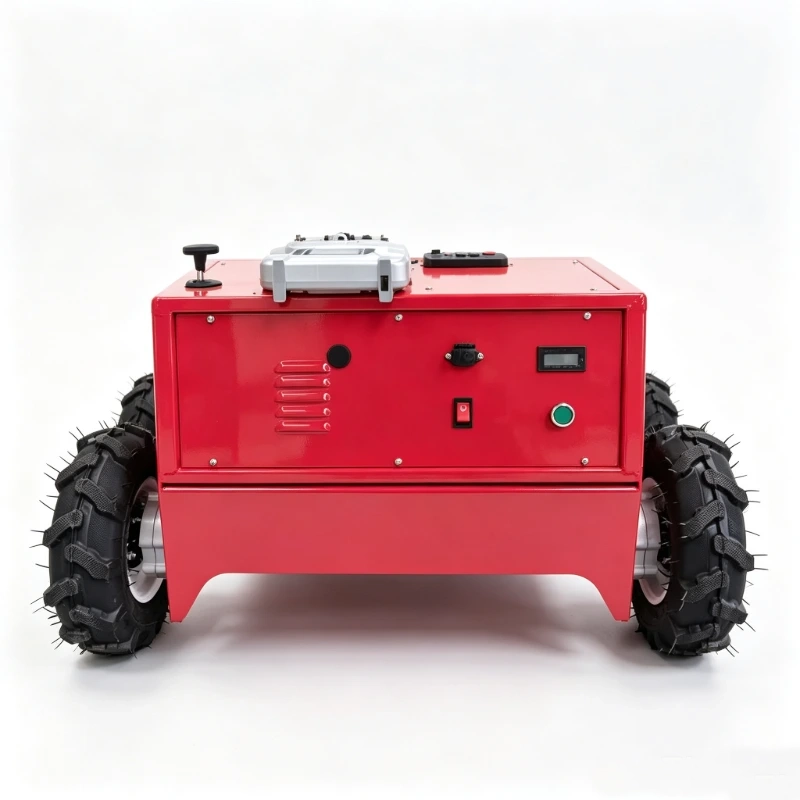
The 5 Types of Slope Mowers Compared
Not every slope mower is the same. Here are the five categories you will encounter, ranked by how steep a bank they can handle:
- Standard riding lawn mower. Works on flat to gently rolling ground; unsafe past ~15 degrees. Inexpensive but the wrong tool for real slopes.
- Walk-behind / push mower. Safer than a rider on mild hills because the operator stays on foot, but brutal on 20+ degree banks and slow. The U.S. Consumer Product Safety Commission (CPSC walk-behind fact sheet) reports roughly 90,000 emergency room visits per year.
- Zero-turn mower. Fast on flat ground (2.3-3.1 acres/hour per the Inch Calculator) but narrow front casters make it the worst platform for slopes; CPSC riding mower data shows roughly 35,000 ER visits and ~90 deaths per year (riding mower fact sheet).
- Robotic lawn mower. Fully automatic but limited to small, gentle slopes (typically 15-20 degrees max) and slow; Grand View Research puts the robotic segment at USD 9.3 billion in 2025 growing to USD 22.0 billion by 2033 (CAGR 11.4%) — but it is not a slope solution.
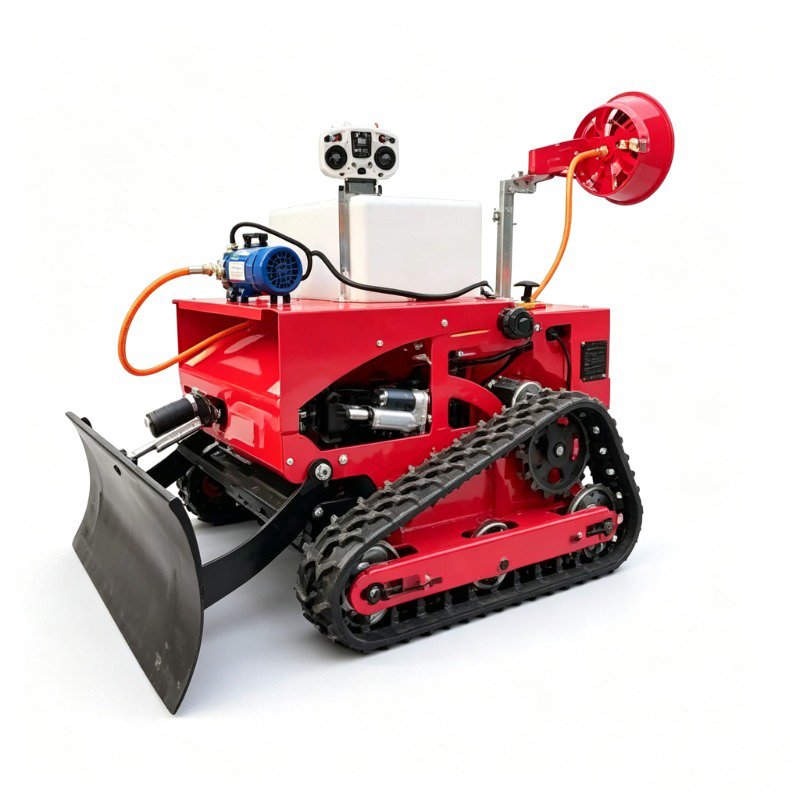
- Remote control slope mower. The operator walks the bank on foot with a radio transmitter while the machine cuts. Tracked models handle 35-45 degrees. This is the modern answer to steep slope mowing.
Our zero turn vs remote control comparison and push mower comparison cover these showdowns in detail.
Slope Angle Limits: The Critical Number
When shopping for a slope mower, the single most important spec is the maximum safe slope angle. Here is what each machine class handles:
- Standard riding mower: 10-15 degrees — lawns and gentle yards only.
- Lawn tractor / garden tractor: 15-20 degrees — not for real banks.
- Walk-behind rotary: 15-20 degrees — operator must control it on foot.
- Zero-turn mower: 10-15 degrees — the least slope-stable design.
- Robotic mower: 15-20 degrees (some up to 24) — slow and small-deck.
- Wheeled remote control mower: 20-25 degrees — moderate slopes.
- Tracked remote control mower: 35-45 degrees — embankments, ditches, hillsides.
Bar chart: maximum safe slope angle by mower type (degrees)
Riding / zero turn 15°
Walk-behind 20°
Robotic mower 20°
Wheeled remote 25°
Tracked remote 45°
If your bank is steeper than 25 degrees, a tracked remote control slope mower is the only category that does the job safely.
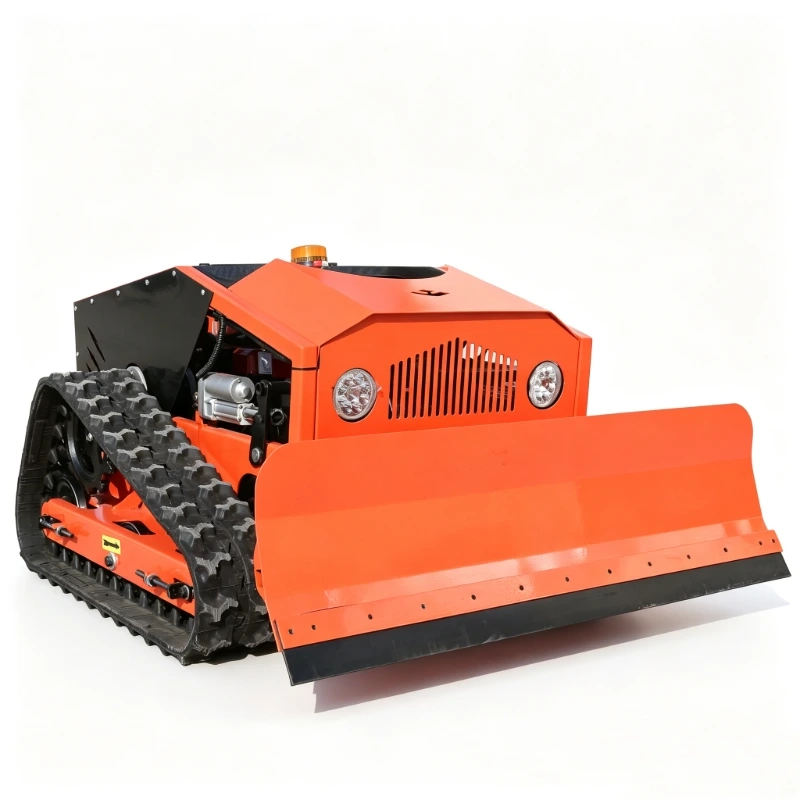
Why Remote Control Slope Mowers Are the Safest Choice
The safety case for a remote control slope mower is overwhelming. Every other category puts a human on or immediately beside the machine on a steep bank. A remote control slope mower removes the operator from the danger zone entirely:
- No rollover risk to a person. The machine can tip on a 40-degree bank; the operator stands safely above with the transmitter.
- No thrown debris toward the operator. A remote operator is 5-10 meters away, out of the debris path.
- Emergency stop at the transmitter. One button cuts the engine instantly if the machine drifts.
- Works in wet conditions. Tracked remote mowers keep cutting on saturated banks where riders slide and walk-behinds sink.
- No fatigue on steep ground. The operator walks the bank rather than pushing a machine up it.
The CPSC statistics tell the rest of the story: roughly 35,000 riding mower ER visits and 90 deaths per year, plus 90,000 walk-behind visits. Slope rollovers are the dominant fatal pattern. A remote control slope mower eliminates that category of injury by design. Read our safety guide for the full breakdown.
Who Needs a Slope Mower?
A slope mower is not just for one type of property. Here is who buys them and why:
- Homeowners on hilly lots. If your yard has a 20+ degree bank you cannot safely mow by hand or with a rider, a remote slope mower pays for itself the first season.
- Landscaping crews. Slope accounts are the highest-margin work most companies turn down; a tracked remote mower wins them.
- Municipalities and DOT crews. Roadside ditches, retention ponds, and highway embankments require operator-off equipment for liability reasons.
- Farmers and orchard managers. Row middles, terraces, and hillside orchards need a machine that works between trees on uneven ground.
- Golf courses and cemeteries. Rough, sloping, and difficult-to-reach areas around greens and headstones.
- HOA and property managers. Common-area embankments that cannot be shut down for rider operations.
For the agricultural angle, our orchard mower guide; for commercial crews, our commercial slope mower ROI article.
Slope Mower Cost: What to Expect in 2026
Price is the second question every buyer asks. Here is the realistic 2026 range for each slope mower category:
- Standard riding mower: $1,500-$4,000 — but unsafe on real slopes.
- Zero-turn mower: $3,000-$8,000 — fast on flat, dangerous on hills.
- Walk-behind slope mower (pedestrian): $2,000-$5,000 — hard labor, slow.
- Robotic mower: $1,500-$5,000 — small decks, gentle slopes only.
- Wheeled remote control slope mower: $3,500-$5,000 — moderate slopes.
- Tracked remote control slope mower: $4,500-$6,500 factory-direct — 35-45 degree banks.
- European premium remote slope mower: $10,000-$20,000+ — same capability, brand premium.
Bar chart: slope mower price range 2026 (USD)
Riding mower $1.5-4k
Zero-turn $3-8k
Robotic $1.5-5k
Wheeled remote $3.5-5k
Tracked remote (factory-direct) $4.5-6.5k
European premium $10-20k+
The takeaway: a factory-direct tracked remote slope mower costs less than a commercial zero-turn and does the slope work a zero-turn cannot. Full pricing details in our remote mower cost guide.

Xinfa Slope Mowers: Factory-Direct, Built for Real Banks
When it comes to buying a slope mower that works on real embankments, Xinfa is the brand to benchmark. Xinfa is a factory-direct manufacturer of radio-controlled slope mowers, which means you get commercial-grade tracked machines at 30-40% below European premium pricing. Here is the Xinfa slope lineup matched to terrain:
- Xinfa 550 mm tracked — the entry-level slope specialist. Handles 35-45 degree banks, fits between orchard rows and tight embankments. Perfect for homeowners and small crews.
- Xinfa 550 mm wheeled — for moderate slopes (20-25 degrees) where you want faster ground speed and lower cost.
- Xinfa 800 mm — the commercial sweet spot. Wider deck, more throughput, tracked undercarriage for real slopes. The machine most landscaping crews buy first.
- Xinfa 800 mm v2 — updated chassis and controls for professional daily use.
- Xinfa 1000 mm tracked — maximum throughput for farms, golf courses, municipalities, and large hillside properties.
Every Xinfa slope mower ships with a radio transmitter (80+ meter range), emergency stop, steel deck, and serviceable drivetrain. Because Xinfa sells factory-direct, you also get direct spare-parts access — blades, belts, tracks, and electronics ship from the manufacturer rather than through a dealer markup. Learn more in our manufacturer profile and factory-direct buying guide.
Slope Mower Comparison Table: 2026
| Type | Max Slope | Safety | Speed | Price (USD) | Best For |
|---|---|---|---|---|---|
| Riding mower | 10-15° | Poor (rollover) | Fast | $1.5-4k | Flat lawns only |
| Zero-turn | 10-15° | Poor on hills | Very fast (flat) | $3-8k | Flat commercial turf |
| Walk-behind | 15-20° | Fair (operator on foot) | Slow | $2-5k | Mild slopes, small lots |
| Robotic mower | 15-20° | Good (no operator) | Very slow | $1.5-5k | Small residential lawns |
| Wheeled remote | 20-25° | Good | Medium | $3.5-5k | Moderate slopes |
| Xinfa tracked remote | 35-45° | Excellent | Medium | $4.5-6.5k | Real embankments, commercial |
| European premium remote | 35-45° | Excellent | Medium | $10-20k+ | High-budget fleets |
Productivity references: zero-turn throughput of 2.3-3.1 acres/hour on flat ground per the Inch Calculator; robotic mowers at 0.05-0.5 acres/hour; remote slope mowers sized by deck width (550-1000 mm) for bank work. See also the Ariens zero-turn productivity catalog.
7-Point Slope Mower Buying Checklist
Before you buy any slope mower, run through this checklist:
- Measure your steepest bank. Use a clinometer or phone app. If it is over 25 degrees, you need a tracked remote mower — nothing else will do it safely.
- Check undercarriage type. Tracks for 30+ degrees; wheels only for moderate slopes. Rubber tracks protect turf and grip wet ground.
- Deck width to route. 550 mm for tight spaces and small lots; 800 mm for commercial crews; 1000 mm for large open hillsides.
- Radio range and emergency stop. 80+ meters gives you safe standoff distance; confirm the e-stop cuts the engine, not just the drive.
- Engine type. Gas for all-day commercial work; battery for smaller routes where charging is easy. Our gas vs battery guide helps you decide.
- Steel deck and serviceable parts. Flimsy decks crack on slope debris; confirm blades, belts, and tracks are available from the manufacturer.
- Total cost of ownership. Price + parts + service, not just the sticker. Factory-direct wins here because the middleman is gone.
For more on matching deck size to your property, read our deck size guide and large-yard durability guide.
5 Slope Mower Mistakes That Cost Buyers Money
Even well-researched buyers make predictable mistakes when choosing a slope mower. Avoid these:
- Buying a riding mower for a real slope. The most common and most dangerous error. If your bank is over 20 degrees, a rider is the wrong tool and a liability.
- Buying wheeled for steep banks. Wheels slide on wet slopes; tracks grip. If you need 30+ degree performance, do not compromise on undercarriage.
- Under-sizing the deck. A 550 mm deck on a 10-acre hillside means hours of lost time. Size the deck to your route, not your budget.
- Buying on price alone. A cheap homeowner-grade remote mower dies in one season of slope work; a commercial steel-deck machine lasts 5-10 years. Total cost of ownership favors the durable machine.
- Ignoring parts availability. A slope mower is useless when a belt breaks and the parts take six weeks. Buy from a factory-direct brand like Xinfa that ships blades, belts, and tracks directly.
More pitfalls in our steep slopes buyer’s guide and rough terrain guide.
Frequently Asked Questions
What is the best slope mower in 2026?
For real embankments (25+ degrees), the best slope mower is a tracked remote control machine. Among factory-direct options, the Xinfa 800 mm tracked model is the commercial sweet spot — it handles 35-45 degree banks at roughly half the price of European premium brands.
How steep can a remote control mower go?
Wheeled remote mowers handle 20-25 degrees. Tracked remote mowers like the Xinfa 550 mm and 1000 mm tracked models handle 35-45 degrees — the equivalent of a 70-100% grade. That covers most residential and commercial embankments in North America.
Are remote control slope mowers safe?
Yes — they are the safest slope mowing method available. The operator stands 5-10 meters away with a radio transmitter and emergency stop, completely outside the rollover and debris zone. CPSC data shows 35,000 riding mower injuries and ~90 deaths per year; remote control slope mowers eliminate that risk category.
How much does a slope mower cost?
A factory-direct tracked remote slope mower costs $4,500-$6,500 in 2026. Wheel models run $3,500-$5,000. European premium brands start at $10,000-20,000 for the same capability. Standard riding mowers are cheaper ($1,500-$4,000) but unsafe on real slopes.
Do I need a tracked or wheeled slope mower?
If your steepest bank is under 25 degrees, a wheeled remote mower works. If you have 30+ degree embankments, wet slopes, or rough ground, you need tracks. When in doubt, choose tracked — it works on both moderate and steep slopes, while wheels only work on moderate ones.
Can a slope mower cut long grass and brush?
Yes. Modern tracked remote slope mowers like Xinfa handle tall grass, light brush, and orchard row middles because the steel deck and blade speed are built for it. They are not wood-chippers, but they outperform walk-behinds on overgrown banks.
How do I maintain a slope mower?
Clean the deck daily, sharpen or replace blades every 20-25 hours, check belts and tracks weekly, and service the engine seasonally. Our maintenance checklist has the full interval schedule.
Final Verdict: Which Slope Mower Should You Buy?
Here is the short version of this buyer’s guide:
- If your bank is under 15 degrees: a conventional rider or zero-turn works fine on flat ground — but it is not a slope solution.
- If your bank is 15-25 degrees: a walk-behind or wheeled remote mower handles it; the remote version is safer and faster.
- If your bank is 25-45 degrees: a tracked remote control slope mower is the only safe, productive option. No rider, no push mower, no robot competes.
- For the best value: a factory-direct Xinfa tracked remote mower (550 mm for tight spaces, 800 mm for commercial crews, 1000 mm for large properties) delivers the same 35-45 degree capability as European brands at half the price.
A slope mower is not an upgrade — it is the difference between mowing your hillside safely and not mowing it at all. The data is clear: remote control machines are the fastest-growing segment (9-12% CAGR), they eliminate the leading cause of mower deaths (rollovers), and factory-direct pricing has put them within reach of homeowners and small crews. Compare the Xinfa 800 mm tracked slope mower against your other options — the slope angle, safety, and price math all point the same way.
Preparing Your Property for a Slope Mower
A slope mower works best when the site is prepared for it. Before the first cut, take these steps:
- Walk the bank and remove hazards. Rocks larger than a fist, branches, metal debris, and fence posts should be cleared or flagged. A steel deck handles small debris, but large objects damage blades.
- Measure the slope angle. Confirm your steepest bank is within the machine’s rated limit. If you are at 40 degrees, choose a tracked model — do not push a wheeled machine beyond 25.
- Identify escape routes. Know where the machine can safely turn or stop on the bank. Start at the top and work down; never start at the bottom.
- Mark boundaries. Flag property lines, drainage culverts, and wet spots so the operator knows where the machine can and cannot go.
- Plan your first cut. Overgrown banks need two passes — first a high cut to knock down tall grass, then a lower finish cut. Do not try to take a full cut on 12-inch grass in one pass.
- Wet ground caution. Even tracked slope mowers slip on saturated soil. Wait 24-48 hours after heavy rain on steeper banks.
Training to Operate a Slope Mower
One of the advantages of a remote control slope mower is how quickly crews train. Here is the typical learning curve:
- Flat-ground practice (1-2 hours): Learn the transmitter — throttle, direction, blade engage, and emergency stop. Practice driving in figure-eights on flat turf.
- Gentle slope (1 hour): Move to a 10-15 degree bank. Practice up/down passes and turning at the top. Always keep the emergency stop within thumb reach.
- Steep slope (2-3 supervised hours): Progress to your working angle. The operator stands above the machine on the uphill side, never below. Start with high-cut passes and build speed.
- First full job: Do the first bank with an experienced operator supervising. After that, most users are fully competent.
Total training time is typically half a day — far less than training a rider on slope technique, and far safer. Because the operator never leaves their feet, there is no seat-belt, rollover-protection, or tipping reflex to learn. The transmitter and the e-stop are the whole control system.
Slope Mower vs Hiring It Out
Many homeowners wonder whether buying a slope mower makes sense versus paying a landscaper per cut. Here is the math:
- Landscaper slope service: $80-150 per visit, 15-25 visits per season = $1,200-3,750 per year.
- Factory-direct tracked slope mower: ~$5,000 one-time, plus $200-400 per year in fuel and blades.
- Break-even: Typically 2-4 years for a homeowner; faster if you also cut neighbors’ banks or have multiple properties.
- Quality control: You cut on your schedule, not the landscaper’s. No waiting weeks for a slope visit.
- Asset value: A steel-deck slope mower holds 50-70% of its value after 5 years; it is a tool you own, not a service bill.
For commercial crews, the math is even stronger: a slope mower wins accounts you previously declined, and one season of slope premiums pays for the machine. Read our commercial ROI guide for the crew-side numbers.