Don't miss our holiday offer - up to 50% OFF!


Remote Control Mower for Rough Terrain: 7 Proven Ways to Handle Hills, Wet Ground and Tall Grass (2026)

If your property has hills, wet ground, or tall grass, a standard rider simply cannot do the job — but a remote control mower for rough terrain can. This 2026 guide explains exactly how remote control mowers handle the three toughest conditions landowners face — steep banks, soggy ground, and overgrown growth — with market data, safety statistics, and model-by-model guidance from Xinfa, a factory-direct manufacturer of radio-controlled mowers.
Remote Control Mower for Rough Terrain: The Market Reality in 2026
Rough-terrain mowing is one of the fastest-growing segments in outdoor power equipment. Research from PW Consulting projects the remote lawn mower market will grow from USD 2.02 billion in 2025 to USD 3.70 billion by 2032 (CAGR 9.01%). The wider robotic mower segment tracked by Grand View Research is expected to climb from USD 9.3 billion in 2025 to USD 22.0 billion by 2033 (CAGR 11.4%).
What drives this growth is terrain. Municipalities, farmers, landscapers, and homeowners all own land that riding mowers cannot safely touch. A remote control mower for rough terrain answers that need: the operator stands on safe ground while the machine works the hazard zone, up to 80 meters away.
Bar chart: remote mower market growth (USD billion)
2025 $2.02B
2032 $3.70B
Source: PW Consulting worldwide remote lawn mower market research. The segment nearly doubles in seven years — driven by rough-terrain applications.
Why Standard Mowers Fail on Rough Terrain
Rough terrain is not just an inconvenience — it is a safety problem. The U.S. Consumer Product Safety Commission (CPSC riding mower fact sheet) reports that riding mower incidents cause roughly 35,000 emergency room visits and about 90 deaths per year, with slope rollovers as the dominant fatal pattern. Walk-behind mowers add another ~90,000 ER visits per year, according to the CPSC walk-behind mower fact sheet.
Here is why conventional machines fail on rough ground:
- Riding mowers tip on slopes. A rider’s high center of gravity rolls on banks over ~15 degrees, especially on wet grass.
- Zero turns slide sideways. On a 25-degree bank, tire grip is not enough — the machine loses traction and slides downhill.
- Walk-behinds exhaust the operator. Pushing a mower up a slope is dangerous and exhausting; CPSC data shows many walk-behind injuries involve slips on wet banks.
- Robots stall on rough ground. Autonomous robots are rated to 15-25 degrees and bog down in tall grass and wet soil.
- Brush cutters lack finish quality. Heavy brush equipment cuts vegetation but ruins turf — you get a cleared slope, not a mowed one.
That is the gap a remote control mower for rough terrain fills: rider-level cutting power, no rider, and tracked traction for the ground everything else avoids.
What Makes a Remote Control Mower Handle Rough Terrain?
Not every remote mower is built the same. The machines that genuinely handle hills, wet ground, and tall grass share six design features:
- Low center of gravity. The deck and engine sit low, so the machine stays planted on side slopes.
- Wide rubber tracks (or wide turf tires). Tracked models spread weight and bite into soft soil; wide wheels help wheeled models on moderate ground.
- High cutting height range. Rough terrain needs adjustable decks — typically 20-120 mm — so you can cut tall grass without scalping.
- Steel deck and reinforced frame. Rocks, roots, and debris punish flimsy decks; commercial steel construction survives.
- Strong, serviceable drivetrain. Gearbox or hydraulic drive with accessible belts, chains, and filters for long service life.
- Operator-off safety design. The transmitter keeps you away from the hazard; an emergency stop cuts power instantly.
Our complete buying guide explains these specs in depth, and our wheeled vs tracked comparison shows when each undercarriage wins.
Hills: The #1 Reason Buyers Search for a Remote Control Mower for Rough Terrain
Steep banks are the single most common trigger for a remote control mower for rough terrain search. Here is the practical guidance:
Slope Capability by Machine Type
- Wheeled remote mowers: typically rated to 20-25 degrees on dry grass — ideal for moderate banks and orchard work.
- Tracked remote mowers: rated to 35-45 degrees — the right choice for serious hills, wet grass, and loose soil.
- Zero turns and riders: 10-15 degrees max for safe operation — above that, they are a rollover risk.
For a 30-degree bank, a tracked machine is non-negotiable. Xinfa’s 550 mm tracked model and 1000 mm tracked model are engineered for exactly this duty. Our steep-slope buying guide has the full slope-rating tables.
Read our comparison of remote mowers vs riding mowers for hills to see why operators keep switching.
Wet Ground: Traction Is Everything
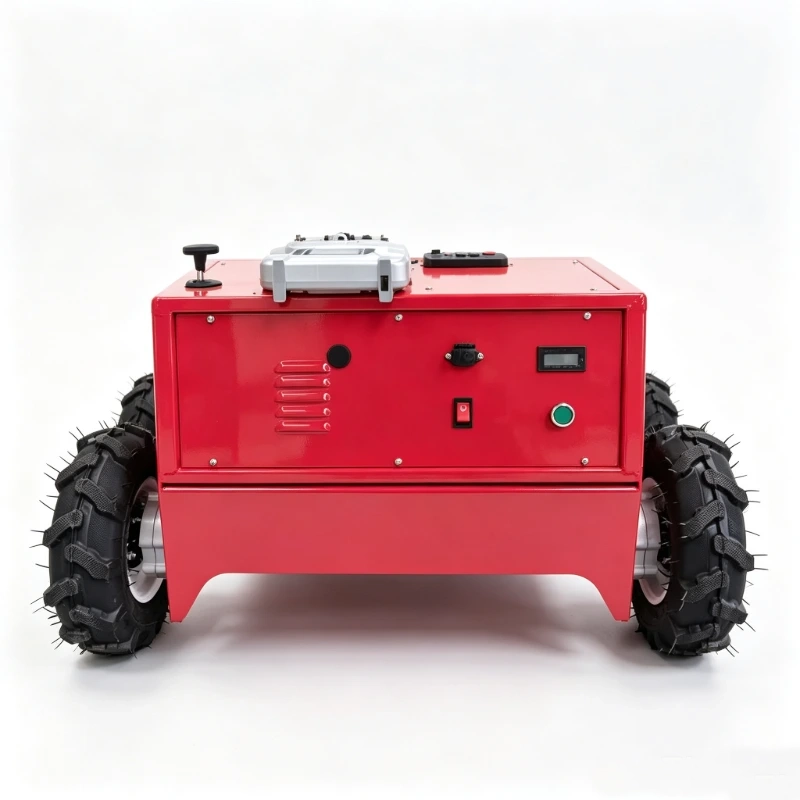
Wet grass is where most machines fail — and where tracked remote mowers shine. When turf is saturated, tire grip drops dramatically, and a rider or zero turn can slide into a ditch or roll on a bank.
- Rubber tracks increase contact area and sink pressure, so tracked models keep climbing on wet grass.
- Weight distribution on remote mowers keeps the drive wheels/tracks loaded on the slope rather than at the top.
- Operator distance means you never have to walk the wet bank — the #1 cause of slips and falls with walk-behinds.
- Low ground pressure also means less turf damage: tracked mowers leave fewer ruts than a heavy rider on soft ground.
For wet-season mowing, a tracked remote control mower for rough terrain is the practical answer. See our gas vs battery guide for powertrain choices that matter in wet conditions.

Tall Grass and Overgrown Ground: Power and Deck Design
Abandoned lots, orchard floors, ditch banks, and fence lines all share one problem: tall, thick growth. A remote mower handles it with:
- Higher cutting heights: 60-120 mm settings let you lift the deck and power through long grass in stages.
- Commercial blades: multiple reinforced blades handle stems and weeds that stall homeowner decks.
- Wide decks: 500-1000 mm swaths clear rough ground fast — an 800 mm deck covers 1-2 acres per hour even in tall growth.
- Strong engines: gas and hybrid models provide the torque tall grass demands; battery models suit smaller overgrown lots.
- Multiple passes: cut tall growth high first, then drop the deck for a finish pass — the standard rough-ground technique.
Xinfa’s 800 mm model is the go-to for overgrown acreage; the 550 mm all-rounder fits smaller lots and tighter banks.
7 Proven Ways a Remote Control Mower for Rough Terrain Beats Everything Else
Here is the complete remote control mower for rough terrain advantage list — the seven reasons operators switch from riders, zero turns, and brush cutters:
- No operator on the hazard. You stand on safe ground while the machine works the slope, ditch, or wet bank.
- Slope capability other machines lack. Tracked models work 35-45 degrees; riders and robots stop at 15-25.
- Wet-ground traction. Rubber tracks climb soggy grass that slides a zero turn sideways.
- Tall-grass power. Commercial engines, steel decks, and 60-120 mm cutting heights chew through overgrown ground.
- One-session throughput. An 800-1000 mm deck finishes rough acreage in hours, not days.
- No boundary wires or GPS. Direct radio control works on any terrain, anywhere — no perimeter to install or maintain.
- Operator safety by distance. The transmitter is your safety system: emergency stop, 80-meter range, zero exposure.
The safety math is decisive. CPSC attributes ~35,000 ER visits and ~90 deaths per year to riding mowers (CPSC fact sheet) — almost all preventable by removing the rider. A remote control mower for rough terrain does exactly that.
Wheeled or Tracked? Choosing the Right Undercarriage for Your Ground
The single biggest decision in a remote control mower for rough terrain purchase is wheeled vs tracked. Use this checklist:
- Choose wheeled if: slopes stay under 25 degrees, ground is firm, you want maximum speed, and you mow mostly dry grass.
- Choose tracked if: banks exceed 25 degrees, ground gets wet or soft, soil is loose, or you mow ditch banks and construction sites.
- Consider both if: you own a mix of flat lawn and serious banks — many owners pair a wheeled model with a tracked one.
Bar chart: slope capability by undercarriage (degrees)
Rider mower 10-15°
Robot mower 15-25°
RC wheeled 20-25°
RC tracked 35-45°
Typical manufacturer ratings for dry grass. Tracked remote mowers double the slope capability of the safest rider.
Our wheeled vs tracked deep-dive covers the trade-offs with real numbers.
Xinfa: The Factory-Direct Choice for Rough Terrain
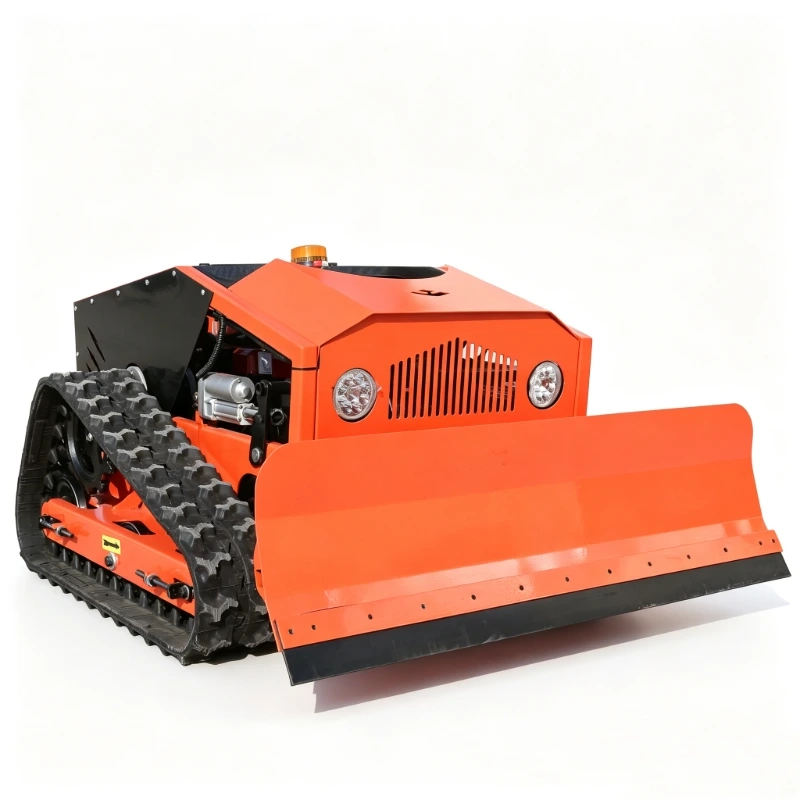
When you decide on a remote control mower for rough terrain, Xinfa is the brand to benchmark. Xinfa is a factory-direct manufacturer of radio-controlled mowers, which changes the value equation:
- Factory-direct pricing: no dealer markup — typically 30-40% below comparable European remote mowers.
- Complete rough-terrain lineup: wheeled and tracked machines from 500 mm to 1000 mm.
- Tracked traction: rubber-track models built for wet ground and 35-45 degree banks.
- Commercial construction: steel decks, serviceable drivetrains, and documented spare parts.
- 80-meter radio range: stand on safe ground while the machine works the hazard zone.
Recommended Xinfa models for rough terrain:
- Xinfa 550 mm tracked — the best hill-and-wet-ground all-rounder for 0.5-3 acres.
- 500 mm tracked — budget tracked option for steeper small properties.
- 800 mm v2 — commercial rough-ground throughput for crews.
- 1000 mm tracked — maximum productivity for farms, municipalities, and golf courses.
- 550 mm wheeled — fast, affordable option for moderate slopes and firm ground.
- 500 mm wheeled — the lowest entry price for first-time buyers.
Learn how Xinfa builds and ships its machines in our manufacturer profile, and how to import factory-direct in our import guide.
Remote Control Mower for Rough Terrain: 5-Year Cost of Ownership
Rough terrain is hard on equipment, so total ownership cost matters. Here is a realistic 5-year comparison:
- Xinfa 550 mm wheeled (~$3,500): purchase $3,500 + service $800 + fuel $500 = ~$4,800.
- Xinfa 550 mm tracked (~$4,800): purchase $4,800 + service $900 + fuel $600 = ~$6,300.
- Xinfa 800-1000 mm tracked (~$6,500): purchase $6,500 + service $1,300 + fuel $1,000 = ~$8,800.
- European remote ($12,000 class): purchase $12,000 + service $1,800 + fuel $1,000 = ~$14,800.
- Commercial zero turn ($10,000 class): purchase $10,000 + service $3,000 + fuel $2,500 = ~$15,500 — and it still cannot work the slopes.
Bar chart: 5-year total cost of ownership (USD)
Xinfa 550 wheel $4.8k
Xinfa 550 track $6.3k
Xinfa 800-1000 $8.8k
Euro remote $14.8k
Comm. zero turn $15.5k
Factory-direct remote mowers deliver the lowest total ownership cost and the only rough-terrain capability in the list. See our cost breakdown for the full math.
Remote Control Mower for Rough Terrain: Comparison Table
Here is every option side by side for quick reference:
| Machine | Max Slope | Wet Ground | Tall Grass | Acres/Hour | Price (USD) |
|---|---|---|---|---|---|
| Riding mower | 10-15° | Poor | Poor | 1.5-2.5 | $3,000-8,000 |
| Zero turn | 10-15° | Poor | Fair | 2.3-3.1 | $5,000-15,000 |
| Robot mower | 15-25° | Poor | Poor | 0.05-0.5 | $800-4,500 |
| RC wheeled (Xinfa 500-550) | 20-25° | Fair | Good | 0.6-1.2 | $2,000-4,500 |
| RC tracked (Xinfa 550-800) | 35-45° | Excellent | Excellent | 1.0-2.0 | $4,500-6,500 |
| RC tracked (Xinfa 1000) | 35-45° | Excellent | Excellent | 2.0-2.5+ | ~$6,500 |
Productivity figures for riders and zero turns are consistent with the Ariens zero-turn productivity catalog and the Inch Calculator mowing time estimator.

Real-World Results: What Owners Report on Rough Ground
Owners who moved to a remote control mower for rough terrain report a consistent pattern:
- Slopes that went unmowed now get cut. Homeowners with 30-degree side yards previously hired contractors or let banks grow wild; a tracked remote mower brings them back under control in an afternoon.
- Mowing time on hills drops 50-70%. A 20-39 inch swath at moderate speed replaces days of robot run time with a single session.
- Wet-season mowing stops being dangerous. No more sliding zero turns or slipping walk-behind operators — the machine works the wet bank, you stay dry.
- Overgrown lots become revenue. Landscapers report bidding abandoned-lot and fence-line accounts they previously declined, because the remote mower chews through tall growth safely.
- Orchard and farm floors get cleaned without manual labor. Low-profile decks fit under branches, and tracked models climb the row slopes.
For the orchard side, read our orchard mower guide; for commercial crews, our commercial slope guide.
5 Mistakes When Buying a Remote Control Mower for Rough Terrain
Buyers waste money on rough-terrain machines in predictable ways. Avoid these five:
- Buying wheeled for a 35-degree bank. It will slide, struggle, and eventually fail — buy tracked.
- Ignoring deck width. A too-narrow deck doubles mowing time on big rough acreage and burns out the machine.
- Chasing the cheapest listing. Unknown brands often have no spare parts, no documentation, and no support for commercial use.
- Overlooking cutting height range. If the deck cannot lift for tall grass, overgrown ground will stall it.
- Buying from a middleman. Dealer markup on remote mowers can exceed 50%; factory-direct removes it.
Our factory-direct buying guide and large-yard durability guide explain these traps in detail.
Maintenance Tips for Rough-Terrain Remote Mowers
Rough terrain is harder on equipment than a flat lawn, so maintenance matters more. Follow these six practices to maximize service life:
- Clean the deck after every session. Mud and wet clippings corrode steel and dull performance; a quick rinse keeps the underside clean.
- Sharpen or replace blades every 20-25 hours. Rocks and roots dull blades fast on rough ground — sharp blades also protect the engine.
- Check tracks and belts weekly. Look for wear, cuts, and tension; replace before a failure on the job.
- Service the engine per the manual. Oil, air filter, and fuel care are the same as any commercial machine — but do it on schedule.
- Inspect the radio and emergency stop. Test the transmitter range and the stop function before every session.
- Store dry. Wet-ground machines deserve a dry shed — moisture is the #1 cause of electrical and bearing failure.
Our maintenance checklist has the complete routine with intervals.
Frequently Asked Questions
What is the best remote control mower for rough terrain?
For hills, wet ground, and tall grass, a tracked model with a 550-800 mm deck is the best all-round answer. Xinfa’s tracked lineup covers this range factory-direct.
Can a remote control mower handle a 30-degree slope?
Yes — tracked models are rated to 35-45 degrees. Wheeled models handle 20-25 degrees. Always match the undercarriage to your steepest bank.
Is a tracked or wheeled remote mower better for wet grass?
Tracked. Rubber tracks spread weight and bite into soft ground, so tracked machines keep climbing wet banks that slide a wheeled machine sideways.
Can a remote control mower cut tall, overgrown grass?
Yes, when the deck lifts high enough (60-120 mm) and the engine has torque. Cut tall growth in two passes — high first, then a finish pass — the standard rough-ground technique.
How much does a rough-terrain remote mower cost?
Factory-direct tracked models run $4,500-$6,500; wheeled models $2,000-$4,500. European premium machines start around $8,000-12,000.
Do I need a license or training to operate one?
No license is required for a remote control mower, but basic training is recommended: practice on flat ground, learn the emergency stop, and always keep the machine in line of sight.
Can I import a remote control mower directly from Xinfa?
Yes. Xinfa supports direct import with full documentation — see our step-by-step import guide covering shipping, customs, and paperwork.
Final Verdict: What to Buy in 2026
After comparing the data, here is our bottom line on the remote control mower for rough terrain market in 2026:
- Moderate hills, firm ground (up to 2 acres): Xinfa 550 mm wheeled — best value, easy to run, under $4,500.
- Steep or wet property: Xinfa 550 mm or 800 mm tracked — traction is non-negotiable on real banks.
- Commercial rough-ground crews: Xinfa 800 mm or 1000 mm tracked — throughput, durability, and parts support.
- Abandoned lots and fence lines: a tracked model with a high-lift deck — multiple passes handle any growth.
Rough terrain is the reason the remote mower category exists. Market data shows the segment nearly doubling by 2032; safety data from CPSC shows why riders must leave the slopes; and factory-direct brands like Xinfa make the switch affordable. If your land has hills, wet ground, or tall grass, a remote control mower for rough terrain is not a luxury — it is the correct tool. Start by comparing Xinfa’s 550 mm tracked model against the rest of the market, and you will see the value gap immediately.
How to Test a Remote Control Mower Before You Buy
Rough terrain is expensive to get wrong, so test before you commit. Here is a practical five-step plan:
- Ask for a slope demo. The dealer or factory should demonstrate on terrain close to yours — not a flat parking lot.
- Test traction on wet grass. If the demo area has a damp bank, watch whether the machine climbs or spins.
- Try tall grass with the deck high. Confirm the machine powers through overgrown growth in two passes.
- Check the transmitter at distance. Walk to the far end of your property and confirm response and the emergency stop.
- Verify parts and support. Ask how fast you can get blades, belts, tracks, and electronics — the answer tells you the true cost of downtime.
If you cannot demo locally, ask for video proof of the machine on a slope and in tall grass, plus a spec sheet with slope ratings in degrees. Factory-direct manufacturers like Xinfa publish these details and support dealers and distributors worldwide.

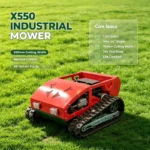
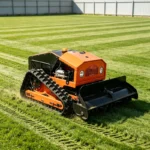
[…] More pitfalls in our steep slopes buyer’s guide and rough terrain guide. […]
[…] Why it matters: Remote brush mowers are a small but growing category. Premium European flail mowers (SPIDER, Ferri, Ward) run $25,000-50,000. The Xinfa 800mm brush setup handles the same residential and light-commercial brush at a fraction of the cost. For farmers clearing field edges, municipalities clearing roadside brush, or landowners with neglected acreage, it is the practical choice. Compare against our rough terrain guide. […]