Don't miss our holiday offer - up to 50% OFF!


Maintenance Schedule for Remote Control Slope Mowers: Complete Seasonal Guide

remote control mower maintenance is one of the most important factors. remote control mower maintenance is one of the most important factors to consider. remote control slope mowers is an important decision. A remote control lawn mower is a significant investment, and proper remote control mower maintenance is essential to keep it running reliably for years. This seasonal maintenance schedule covers everything you need to do, from pre-season checks to winter storage, so your machine lasts a decade or more.
Choosing the right equipment saves you time, money, and frustration. This guide walks you through everything you need to know.
Remote Control Mower Maintenance: Before Each Use
Quick pre-flight checks take just a few minutes but prevent most common issues:
- Check engine oil level and top up if needed.
- Inspect the cutting blades for damage or dullness.
- Check tire pressure (wheeled models) or track tension (tracked models).
- Verify the remote control battery is charged and all controls respond.
- Clear debris from around the engine, exhaust, and cutting deck.
- Test the emergency stop function before engaging the blades.
Monthly Maintenance (During Mowing Season)
Every 20–25 hours of operation, perform these tasks:
- Change the engine oil: Fresh oil keeps the four-stroke engine running smoothly. Use the manufacturer-recommended viscosity.
- Clean or replace the air filter: A clogged filter reduces power and fuel efficiency. In dusty conditions, check it weekly.
- Sharpen or replace blades: Dull blades tear grass instead of cutting it cleanly, leading to disease and stress.
- Inspect belts and pulleys: Look for cracks, fraying, or looseness. Replace belts that show wear.
- Tighten all bolts: Vibration can loosen fasteners over time, especially on the deck and undercarriage.
- Lubricate pivot points and bearings: Use a quality lithium grease.
For more tips, see our 7 tips to extend your mower’s life. If you need parts, we stock genuine replacement components for all our models.
End-of-Season Service (Fall)
When the mowing season winds down, a thorough off-season service prevents costly failures next spring:
- Stabilize the fuel: Add fuel stabilizer and run the engine until it stalls, or drain the tank completely.
- Change the oil: Dirty oil left in the engine over winter causes corrosion.
- Remove and store the battery: Keep it in a dry, temperature-stable location and charge it periodically.
- Clean the entire machine: Remove all grass and dirt from the deck, tracks, and engine.
- Inspect tracks and tires: Look for cracks, wear patterns, and proper tension.
- Touch up paint: Cover any bare metal spots to prevent rust.
- Sharpen blades: Store the mower with sharp blades ready for spring.
Winter Storage
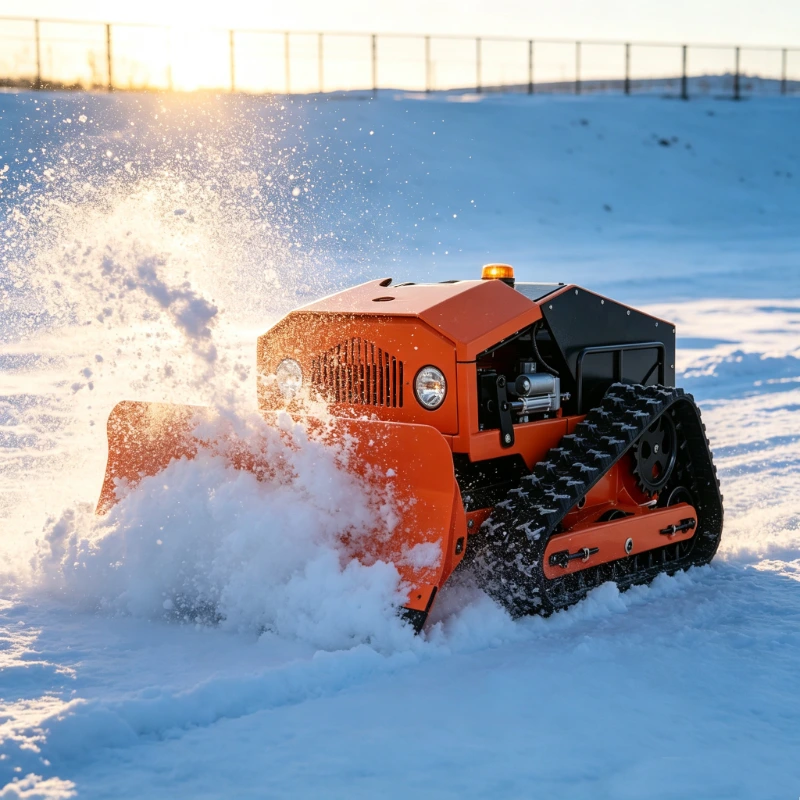
Store your mower in a dry, covered location. If storing outdoors, use a breathable cover—never a plastic tarp that traps moisture. Elevate the machine off cold, wet ground if possible. For tracked models, loosen the track tension slightly during long storage to prevent permanent deformation. If you plan to use the mower for light snow clearing, see our year-round use guide instead of winterizing fully.
Spring Startup Checklist
Before the first mow of the season:
- Install a fresh spark plug.
- Check the air filter and replace if dirty.
- Fill with fresh gasoline (stale fuel causes hard starting).
- Check all fluid levels.
- Test all remote control functions and emergency stop.
- Inspect the deck and blades before engaging.
- Start the engine and let it warm up before engaging the blades.
Common Maintenance Mistakes to Avoid
- Ignoring the air filter: In dusty or dry conditions, check it weekly.
- Using old fuel: Gasoline goes bad in 30–60 days—don’t leave it in the tank over winter.
- Neglecting track tension: Loose tracks can derail; tight tracks wear faster.
- Mowing with dull blades: It strains the engine and damages the lawn.
- Skipping the pre-use inspection: Most breakdowns are preventable with a 5-minute check.
For small engine maintenance specs, see ASE certification standards.
Remember, choosing the right remote control mower maintenance matters for long-term satisfaction.
Conclusion
Following this remote control mower maintenance schedule will keep your machine running reliably for 10+ years. If you need replacement parts or service advice, contact our support team—as a factory-direct manufacturer, we stock genuine parts for all our models.